HOMESTEADING and THE GOLD RUSH
The California Gold Rush brought the first settlers of European descent to the Tuolumne area. Originally searching for their fortunes in gold in the streams and soil of the Mother Lode, these early miners established a community they eventually called Summersville.
While the Gold Rush era has been established to range from 1848 into the late 1860’s, a second, smaller boom in gold mining occurred in Tuolumne County between 1890 and 1915. The east Belt region of gold-bearing strata runs parallel to and east of the main Mother Lode. Many Gold Rush era camps were abandoned as soon as surface diggings played out, with only a few camps surviving as permanent pioneer settlements. One of the earliest established camps near present-day Tuolumne was Cherokee Diggings. Founded in 1850-1852, the camp was about two miles northwest of the future Tuolumne townsite.
Franklin, Elizabeth, and daughter, Lee Ann Summers arrived by wagon train from Missouri via the Carson River route. They built their log cabin on the west bank of Turnback Creek and established their homestead in 1854.
Meanwhile, with the discovery of gold along Turnback Creek, in quartz outcroppings, and, in 1858, at the Eureka Quartz Mine site, (near the end of present day First Street), a town began to form about half a mile to the east of the Summers’ home.
Summersville
On March 26, 1856, Franklin (Frank) Summers was shot four times and killed over a land dispute, leaving Elizabeth a widow at 24 years of age with two young children. Mrs. Summers opened her home to boarders. She took in many miners free of charge until they could pay her from their mining rewards. The miners, in appreciation of her trust, wanted to name the growing town “Elizabethville”. She declined the offer and suggested the settlement be named in memory of her late husband. Thus the miners named it “Summersville” in 1857.
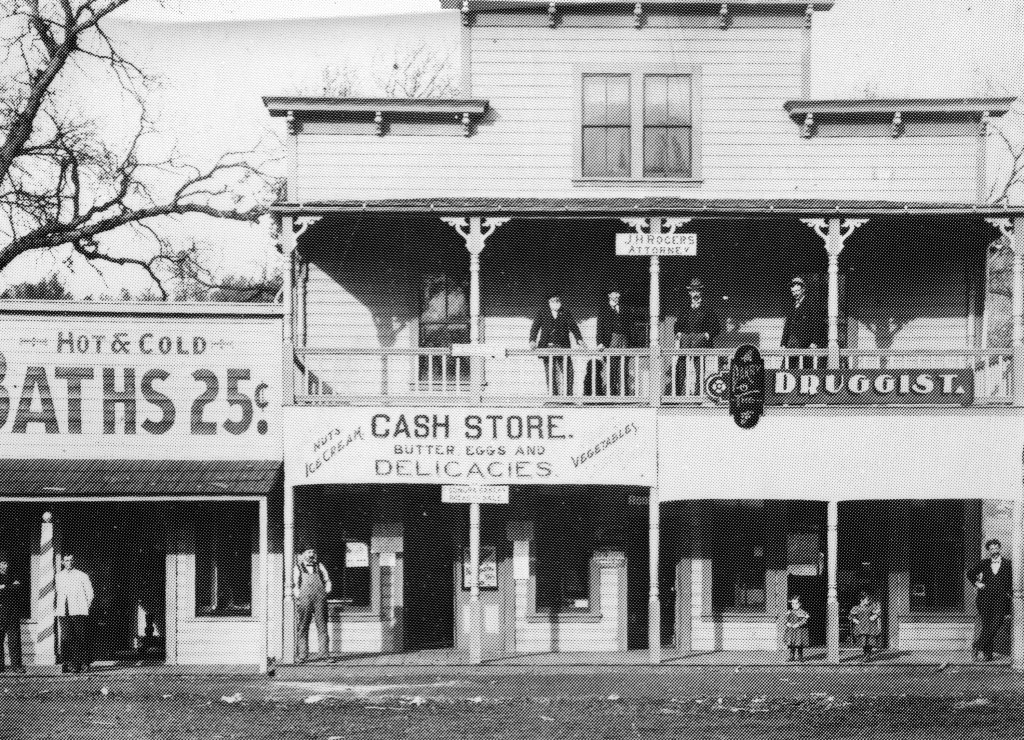
The business district grew to support the mining effort and growing population. It was concentrated around an undeveloped “common”. The Summersville era businesses were destroyed by fires in 1905 and 1906. The original townsite was rebuilt in residential homes. The common is still visible at the intersection of Carter Street and Buchanan Road.
An E. Clampus Vitus historical marker, fire cart shelter and hand fire cart are in the Commons at the corner of Carter and Buchanan Streets.
Carters
By 1865, Summersville had grown with the addition of several residences, two stables, several barns, a slaughterhouse and a butcher shop. One of the most prominent businessmen in the Summersville townsite was merchant Charles H. Carter. Mail was already received and distributed at the Carter’s Store, so the residents began referring to the location as “Carters”. When a post office was established in 1860?, the Postal Service feared the similarity of “Summersville” to a Contra Costa town named “Somersville” would be cause for confusion. The name was changed to Carters.
Mr. Carter donated land and substantial funds to build the town’s methodist Church, the community’s first established place of worship. His wife, Sarah Carter, launched the first school in Summersville.
Carter Street and Carters Cemetery still bear the historic name.
Several ranching homesteader of note in the area include the Baker family, who owned land which would later become the West Side Lumber Company mill site, as well as land which the family deeded to Tuolumne County as the site for the local elementary school. The Baker family still owns and operates ranchland south of Tuolumne.
C.H. Carter and Joseph Lord were the largest landowners in the Summersville townsite and its surroundings. The original Joseph Lord ranch house, built in 1870, has been renovated and is now located on Carter Street between Buchanan Road and Tuolumne Road North. It is marked by a monument erected by E. Clampus Vitus.
The Duckwall and Ingalls families, early pioneers, also established large homesteads east of the township across the North Fork Tuolumne River. Duckwall Mountain, a county landmark visible from the Central Valley bears the name of the Gold Rush-era pioneers. The Ingalls ranch was the site for filming the TV series “Little House on the Prairie” in the 1970s-1980s.
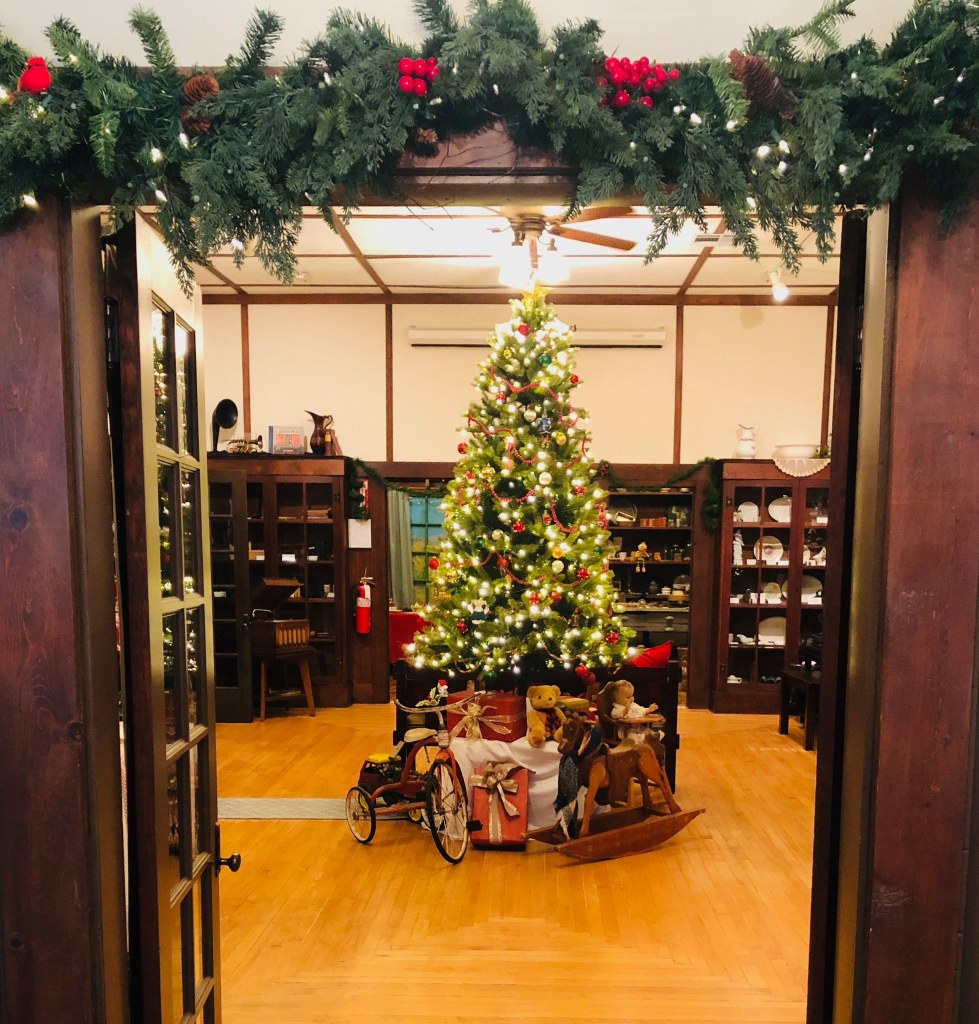
Several exhibits in the Museum pay homage to this era.
Main Room: the large exhibit to the right as you enter the room features photographs and artifacts from the original townsite of Summersville/Carters and an original map showing the layout of the Summersville townsite, its “additions” and the later layout of the township, “Carter”, under West Side developers. To the left of the entry to the Main Room is a case featuring family Bibles, photo albums and books from pioneer and era homesteaders.
Family Gallery: off the main room are numerous clothing and family heirlooms and furnishings from the era, portraits of Frank and Delia Baker, whose ranchland became the site of the West Side Lumber mill and who donated land for the town’s elementary school. Exhibits of local school desks, books, learning tools and other items from local teachers and children. Photographs of early school classes.
Kitchen Room: Pioneer era utensils and household objects.
Train Room: Mining maps, photos and equipment are featured in the gallery to the left of the main room. Community Gallery: A working model of the Lady Washington Mine stamp mill and a display of agricultural items.

